The thinkers behind the book
Lineage
The Tao of Lucidity did not arrive from nowhere. It stands where many rivers of thought converge: the Western river of reason and the Eastern river of mystery, the classical river of practice and the modern river of science. The lineage below is arranged by depth of influence: the larger the portrait, the more the framework leans on it. Open any figure to see what the book inherits, and where it departs.
Portrait size = depth of influence
Foundational
Remove any one and the framework cannot stand
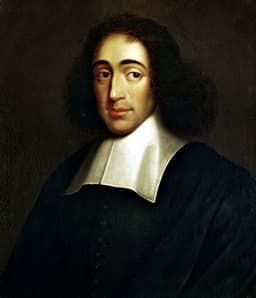
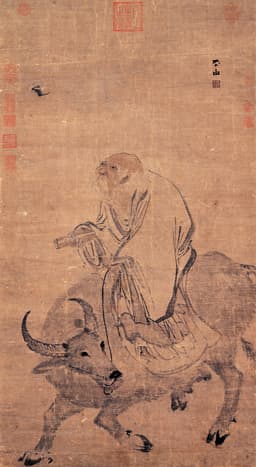
Structural
Each shaped a single load-bearing part
Practical reason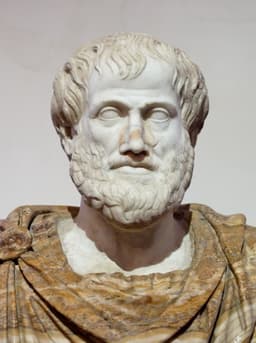 Aristotle384–322 BCEBoundary of reason
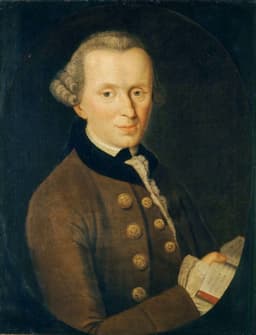 Kant1724–1804From metaphysics to polity
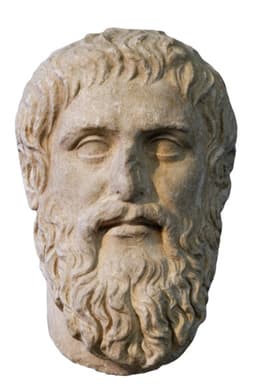 Plato428–348 BCECommitment amid absurdity
W
Wittgenstein1889–1951Time and finitudeH
Heidegger1889–1976Phenomenology of mind☸
Buddhist Traditions5th c. BCE –Dignity and the sublimeC
Camus1913–1960The hard problemN
Nagel & Chalmers1937– / 1966–Significant
Precedent, correction, practice, or grounding
The cogito Descartes1596–1650Analogy of being
 Aquinas1225–1274The leap of faith
 Kierkegaard1813–1855Attention as grace
 Heraclitusc. 535–475 BCESelection
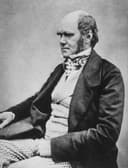 Darwin1809–1882Information
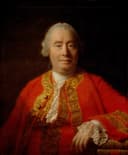 Hume1711–1776Apophatic depth
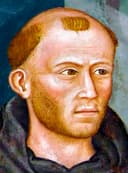 Meister Eckhartc. 1260–1328Machine intelligence
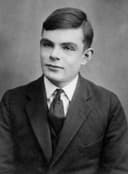 Turing1912–1954Manufactured obscuration
W
Simone Weil1909–1943Plurality and judgmentA
Arendt1906–1975Two libertiesB
Isaiah Berlin1909–1997The public sphereH
Habermas1929–EmptinessN
Nāgārjunac. 150–250 CELogos and fluxS
Shannon1916–2001Fact and valueZ
Shoshana Zuboff1951–Also in dialogue
Other thinkers the book cites, borrows from, or corrects by name
Zhuangzi4th c. BCEWu-wei and the equality of things: the freer, more playful face of the Daoist source.Foucault1926–1984Knowledge and power are entangled, which is why obscuration has a politics.Jung1875–1961Archetype theory, borrowed for the three images and downgraded to meditation tools.Peter Singerb. 1946The circle of ethical concern widens, though pain is not made the sole moral currency.Buber1878–1965I and Thou: relation as a mode of knowing, kin to the measure of analogy.Merleau-Ponty1908–1961Perception is embodied, a reminder that experience is lived before it is analyzed.J. S. Mill1806–1873Liberty and the harm principle, weighed in the derivation of the political principles.Liu Cixinb. 1963The Dark Forest, whose literary intuition becomes the ξ=0 special case of the framework.Hobbes1588–1679The social contract born of fear, an interlocutor for the derivation of the polity.Locke1632–1704Consent and natural rights, weighed in how legitimate authority is grounded.Rousseau1712–1778The general will, tested against the framework's account of collective lucidity.Rawls1921–2002Justice as fairness, a modern foil for grounding the political principles.Bentham1748–1832Utilitarian calculus, engaged and then bounded where being precedes utility.