Significant
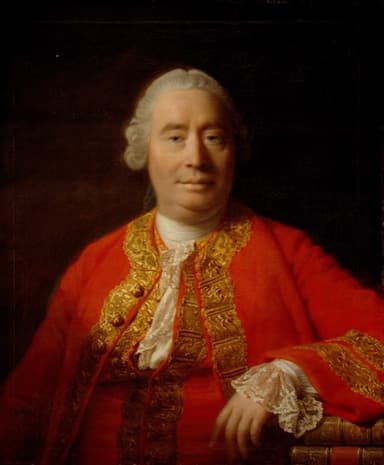
Hume
1711–1776 · Fact and value
The is-ought gap: descriptive facts alone never entail a prescription, and causal necessity is never simply observed.
How Hume shapes The Tao of Lucidity
Vigilance about description and prescription
Hume's is-ought gap is the discovery that descriptive facts alone never entail a prescription, and that causal necessity is never simply observed but supplied by the mind. The framework inherits this vigilance and builds it into its method: no value claim is allowed to masquerade as a fact about Tao's unfolding (D2). This is why the ethical structure does not pretend that lucidity is obligatory merely because it is real; the gap is acknowledged as a permanent feature of honest reasoning.
Crossing the gap with named axioms
Where Hume left the gap as a warning, the framework crosses it deliberately and in the open. Rather than smuggling a prescription in through sleight of hand, it introduces bridge axioms (E), explicitly marked moves that carry the reasoning from the descriptive to the normative and own their status as assumptions. The point is not to dissolve Hume's gap. It is to honor it: every passage from is to ought is named, numbered, and exposed to scrutiny, so the reader always knows exactly where a value entered the system.
Honest ethics for an automated age
The stakes grow sharper when systems claim to derive what we ought to do from what the data is. An AI that optimizes a metric is quietly crossing the is-ought gap on our behalf, usually without naming the value it has assumed. Living lucidly requires the Humean discipline made explicit: demanding that every leap from description to prescription be a visible bridge axiom (E) rather than a hidden one. To keep ethics honest in an automated age is to insist that no machine, and no person, smuggle an ought past us in the guise of a fact.
Inheritance and departure, at a glance
What the book inherits
Vigilance about sliding from description to prescription.
Where it departs
The gap is bridged explicitly and honestly, by named bridge axioms rather than by sleight of hand.
In one line
The is-ought gap is honored, then crossed by explicit bridge axioms.
Shaped