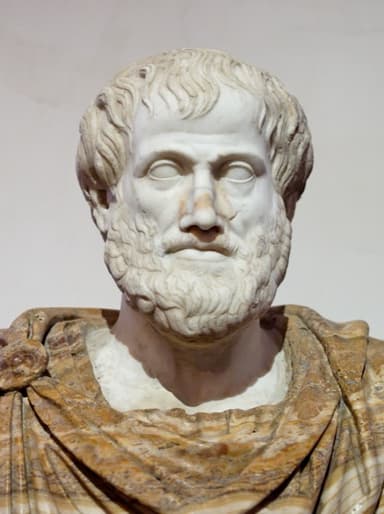
Structural
Aristotle
384–322 BCE · Practical reason
Practical wisdom (phronesis): apt judgment amid uncertainty that no rule can fully capture, oriented toward flourishing (eudaimonia) and the mean.
How Aristotle shapes The Tao of Lucidity
Apt judgment no rule can capture
Aristotle gives the framework practical wisdom, phronesis, the capacity for apt judgment amid uncertainty that no rule can fully capture, and this shapes the Test of Lucidity at the heart of the book's ethics. From him it also takes the mean, the sense that the right response usually sits between excess and deficiency, and eudaimonia as the shape of a flourishing life rather than a momentary good. These are not abstract maxims. They are a picture of how a finite agent actually decides well when the situation outruns any code. The framework reads its central ethical test as an exercise of exactly this kind of trained, situational judgment.
From teleology to probability
Aristotle anchored practical wisdom in teleology, the view that each thing has a built-in end toward which it strives, and the framework declines that anchor. It rejects the claim of fixed natural ends, holding instead that the unfolding has no guaranteed purpose written into it in advance. In their place it upgrades judgment with the language of probability, recasting apt judgment under uncertainty as something that can be made more precise without pretending the uncertainty has been removed. Phronesis survives the loss of its teleological frame and emerges sharper, as skilled reckoning with what is likely rather than discernment of a fixed end.
Judgment where rules run out
Automated systems are excellent at applying rules and brittle exactly where rules run out, which is the territory phronesis was always meant to govern. Aristotle's contribution keeps the framework focused on that territory: living lucidly requires a judgment that handles the particular, uncertain, unrepeatable case no procedure fully anticipates. Reframed through probability, this judgment becomes teachable and checkable rather than mysterious, while still demanding a human capacity that cannot be reduced to a lookup. The good life, on this reading, is not a target one optimizes toward. It is a flourishing one cultivates through repeated apt choices.
Inheritance and departure, at a glance
What the book inherits
Practical wisdom, the mean, and eudaimonia as the shape of a good life.
Where it departs
It rejects teleology and upgrades judgment with the language of probability.
In one line
Inherits practical wisdom, rejects teleology, upgrades judgment with probability.
Shaped